
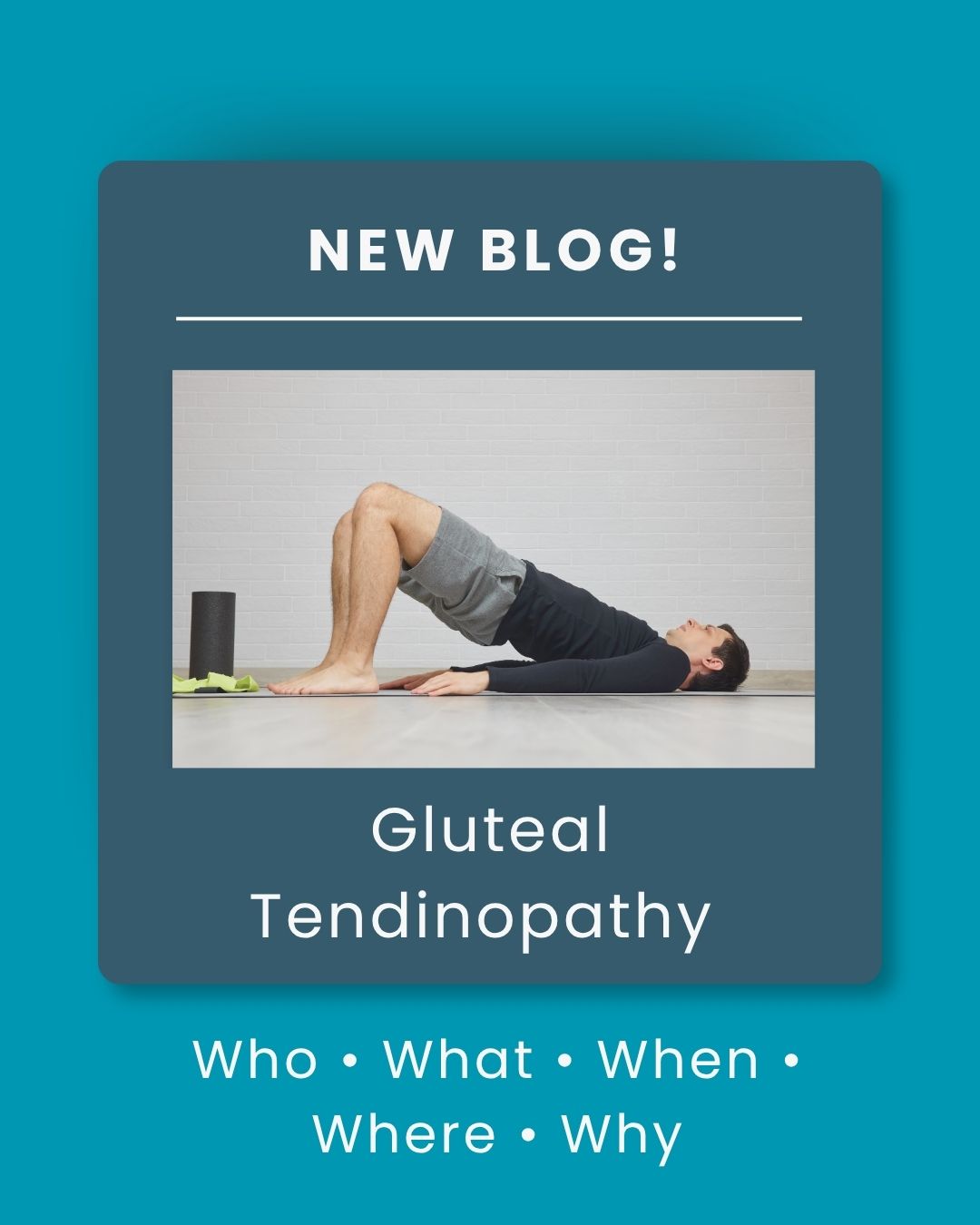
Gluteal Tendinopathy: The Who, What, When, Where & Why
WHO gets it:
The gluteus medius tendon has traditionally been linked to lower estrogen levels, which is why this condition has often been associated with post-menopausal and postpartum women. Hormonal changes have been shown in multiple studies to impact tendon health and their ability to handle load.
More recent research shows that gluteal tendinopathy is not limited to this group exclusively; Men and women of almost any age can develop it.
This is most commonly seen in:
- Runners and walkers
- People increasing their activity levels
- People returning to exercise after a period of inactivity
In these individuals, the injury is less related to hormones and more associated with overloading the tendon, leading to irritation.
WHAT is it:
The gluteus medius muscle plays an important role in:
- Moving your leg out to the side (abduction)
- Rotating the hip
- Stabilizing your pelvis in single leg weight bearing activities
Gluteal tendinopathy is one of the most common causes of outer hip pain, involving irritation of the gluteal tendons, which attach to the outside of your hip.
This condition typically develops when the tendon is exposed to too much load or compression, especially if activity levels have increased too quickly without giving the tendon time to adapt. If the tendon isn’t tolerating load well, everyday movements can become painful.
WHEN does it show up:
Gluteal tendinopathy is most often aggravated by weight bearing activities, such as:
- Walking or running
- Hills or stairs
- Standing on one leg (like when getting dressed or balancing)
Symptoms are not always immediate and can be delayed, which can make it challenging to identify what activities are aggravating your pain.
This tendon is also sensitive to compression. This means it can also be aggravated by:
- Prolonged sitting or lying on the sore side
- Stretching the outer hip
- Crossing your legs
WHERE does it hurt:
Glute med tendinopathy typically causes pain along the outside of the hip. This discomfort may:
- Stay localized to the bony area of the hip
- Spread down the outside of the thigh
- Be tender to touch
Because of the location, this condition is often confused with things like hip bursitis or even osteoarthritis.
WHY it isn’t getting better:
Gluteal tendinopathy doesn’t always settle on its own. In fact, research shows with a wait and see approach nearly half of patients will have pain one year later. Early, targeted treatment can make a significant difference for pain as well as preventing ongoing issues in the hip, knee, and low back.
So why is it still irritated?
- Too much compression: sitting in low chairs, lying on the sore side, or aggressive stretching can irritate the tendon
- Loading patterns: either not loading the tendon enough, or doing exercises that are too aggressive or poorly tolerated
- Activity progression: returning to activity too soon, which doesn’t give the tendon time to adapt
What actually helps?
Research shows that physiotherapist-guided education and exercise is the most effective treatments for gluteal tendinopathy.
Treatment focuses on:
- Reducing compressive positions during early stages of healing
- Gradually reloading the tendon
- Progressively increasing activity over time, including graded return to aggravating activities like running
With the right approach, tendons can adapt and become more tolerant over time!
Sources:
Grimaldi A, Ganderton C, Nasser A. Gluteal tendinopathy masterclass: Refuting the myths and engaging with the evidence. Musculoskeletal Science and Practice. 2025;76:103253. doi:10.1016/j.msksp.2025.103253
Bremer T, Nicklen P, Morrissey D, et al. The efficacy of gluteal tendinopathy treatments: A systematic review. Clinical Rehabilitation. 2025;39(5). doi:10.1177/02692155251327298