
Motor Control and Motor Programming: Why How You Move Matters
When most people think about physiotherapy, they think about stretching tight muscles, strengthening weak muscles, or improving joint mobility. While these can all be important parts of treatment, there is another area we work on extensively in physiotherapy: motor control and motor programming.
Put simply, we are often helping your brain and body learn—or relearn—how to move.
What Is Motor Control?
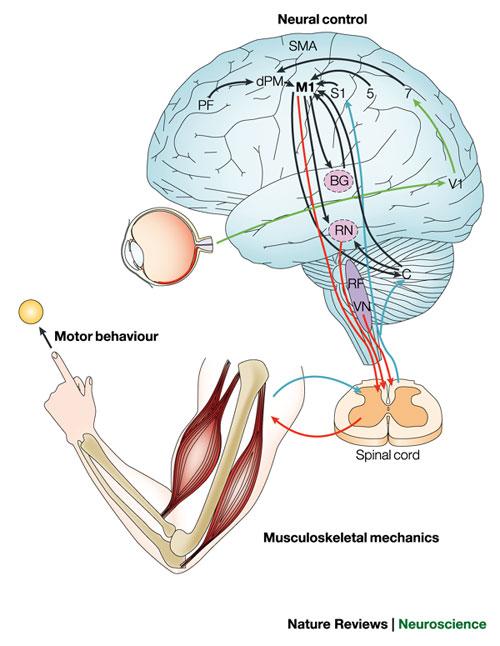
Motor control is your nervous system’s ability to coordinate your muscles and joints to produce a movement.
Every movement you make requires communication between your brain, spinal cord, nerves, muscles, and joints. Your nervous system receives information about your body and your environment, processes that information, and then determines how your muscles should respond.
For example, lifting your arm overhead may seem like a simple movement. In reality, your nervous system has to coordinate movement of your shoulder joint, shoulder blade, spine, and numerous muscles. These muscles need to activate with the right amount of force and at the right time.
Good motor control allows this to happen efficiently and automatically.
What Is Motor Programming?
A motor program is essentially a movement strategy that your nervous system has learned and stored.
Think about learning to ride a bike. At first, you have to consciously think about balancing, steering, and pedalling. The movement feels awkward and requires significant concentration.
With practice, your nervous system develops a motor program for riding a bike. Eventually, you can get on a bike and ride without consciously thinking about every individual movement.
The same process happens with walking, running, reaching, lifting, squatting, throwing, and almost every other movement we perform.
What Happens After Pain or Injury?
Pain and injury can change the way we move.
When something hurts, the nervous system often adapts. Muscles may activate differently, movement may become more guarded, or the body may begin using an alternative strategy to complete a task.
Initially, this can be helpful.
If you sprain your ankle, for example, limping may temporarily reduce stress on the injured tissue. If your shoulder is painful, you may change the way you lift your arm to avoid discomfort.
The problem is that these altered movement strategies can sometimes persist even after the original injury has improved.
Your nervous system has practised the new movement pattern—and it may have become part of your motor program.
This is one reason why someone may say:
“My injury has healed, but it still doesn’t feel right.”
“I feel weak even though my strength testing is normal.”
“I can do the exercise, but I can’t seem to use it when I’m playing my sport.”
“I always compensate with another muscle.”
“My shoulder just doesn’t move properly.”
In these situations, simply making a muscle stronger may not be enough.
We may need to change how the nervous system is organizing the movement.
This Is Where Motor Control Training Comes In
Motor control exercises are designed to improve the quality, timing, coordination, and efficiency of movement.
Your physiotherapist may ask you to perform a movement slowly, use a mirror, change your position, focus on a specific part of the movement, or complete an exercise with very little resistance.
Sometimes patients wonder why an exercise seems “too easy.”
The goal may not be strength.
The goal may be to give your nervous system an opportunity to practise a better movement strategy.
For example, we may be working on:
- The timing of the shoulder blade during arm movement
- Coordination of the rotator cuff muscles
- Control of the pelvis during walking or running
- Trunk control during lifting
- Knee position during a squat or landing task
- Foot and ankle control during balance activities
- Coordination of the neck and eyes following a vestibular injury
The exercise is often only the starting point. Once the movement improves, we gradually add speed, resistance, complexity, fatigue, and more functional tasks.
Repetition Matters—But It Needs to Be the Right Repetition
The nervous system learns through repetition.
This is why doing an exercise once or twice in the clinic is rarely enough to change a movement pattern. The brain needs repeated opportunities to practise and refine the movement.
However, more repetition is not always better.
If you repeatedly practise a movement using the same compensation, you may simply become more efficient at the compensation.
This is why we often emphasize the quality of an exercise before increasing the weight or number of repetitions.
We want to practise the movement we are trying to teach.
From Conscious Movement to Automatic Movement
Early in rehabilitation, a new movement strategy may require significant concentration.
You may need to think about your shoulder blade, your knee position, your breathing, or how you are loading through your foot.
But the ultimate goal is not for you to think about these things forever.
The goal is for the movement to become automatic.
As the nervous system becomes more familiar with the movement, less conscious attention is required. The new strategy becomes part of your motor programming and is more likely to carry over into everyday activities, work, or sport.
Why This Matters for Function
Being strong is important—but strength alone does not guarantee good movement.
A person can have strong muscles and still have difficulty coordinating them effectively during a specific task. Similarly, someone may demonstrate good movement in a quiet treatment room but lose that control when they are moving quickly, fatigued, distracted, or returning to sport.
This is why physiotherapy rehabilitation often progresses beyond basic strengthening.
We are trying to help the nervous system use your strength, mobility, and sensory information effectively during the activities that matter to you.
At Elora Physiotherapy, motor control and motor programming are an important part of many rehabilitation programs. Whether you are recovering from an injury, dealing with persistent pain, returning to sport, or trying to improve how you move, treatment may involve much more than simply strengthening a muscle.
Sometimes, we are helping your body get stronger.
Sometimes, we are helping your nervous system find a better way to move.
And very often, we are doing both.