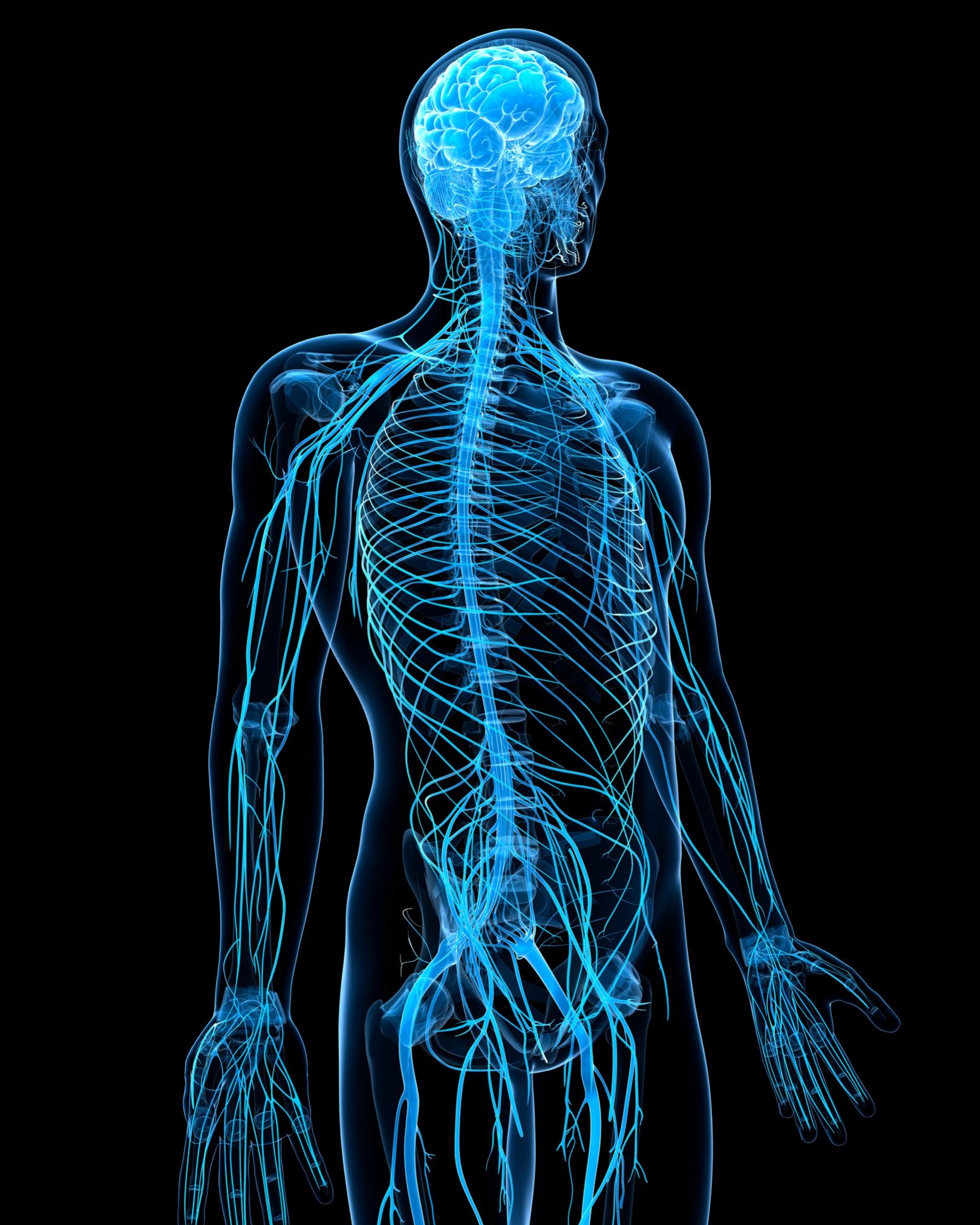
The simple answer is that nerves control everything.
Neurons in our brain, spinal cord, and throughout our body control all of our bodily functions. They are also heavily involved in our pain experience and our recovery. To understand why we care so much about the nervous system, let’s break down what it is and what it does.
The Nervous System
Your nervous system connects your brain to the rest of your body; it is constantly collecting information from your body and the environment, interpreting it, and sending messages back out to keep you safe and functioning. This happens every day, often without you even noticing.
There are two main parts of the nervous system:
- The Central Nervous System: this consists of your brain and spinal cord. Consider it the main control centre of the body, that receives information, interprets it, and coordinates responses.
- Peripheral Nervous System: this consists of all the nerves outside the brain and spinal cord that connect the CNS to the rest of the body. They are responsible for sending information to the brain, like pain, touch, or temperature, and also carrying the response from the brain back to muscles and organs.
Within these systems, there are different nerves that have different responsibilities:
Some nerves control voluntary movement. This includes things like walking, talking, reaching, and exercising – things you choose to do (YES, some people do choose to exercise!)
Other nerves control automatic processes that you don’t have to think about, like your heart rate, breathing, or digestion. This part of your nervous system may be running in the background, but it can really impact how you experience pain, stress, and healing.
Why does this matter?
Your body is always shifting between two states:
- Protection/Stress: This is your body’s alarm system, here to protect you from perceived threat. Most people know it as “Flight or Flight.” When it thinks there is danger, it will increase your heart rate, dilate your pupils, create muscle tension, and heighten your pain sensitivity. This can be helpful in the short term, but if you stay in this state for too long, it can contribute to ongoing pain.
- Calm/Rest: This is your body’s “baseline”, and it is what your body needs for healing and recovery. Most people know this as “Rest and Digest.” In this mode, your body conserves energy, calms your heart rate, and gives energy to systems like digestion.
In physiotherapy, pain isn’t just about muscles and joints; it’s also about the nervous system and how it is functioning. Your nervous system can impact how intense pain feels, how quickly muscles tense or relax, and how sensitive the body is to movement or load. By calming an overprotective nervous system, strength, mobility, and function can improve more smoothly.